Ok, yes, it’s been a while. A long while. There’s no excuse really. We just lost the motivation to keep it going. I am writing this while in São Paulo, Brazil at the start of our next adventure but I’m going to catch up on some key things that happened during the rest of our time in Ghana first.
Our last post was of our trip to the Gambia which took place in April of 2024. We got through the rest of the school year and had our usual summer, spending time in both the UK and the US. In the October break of that year we went back to Naivasha this time meeting up with my brother, Simon and his partner (now wife!) Paula, and had a fantastic time. They loved it as much as we did and are planning a trip back there again. Fast forward to our December break of 2024.
Buoyed by the success of finding an Airbnb in a wonderful African safari-like place allowing a lot of the wonder of safari at a fraction of the cost we looked around for somewhere else where we could achieve the same aim. South Africa seemed like the obvious choice but hadn’t really been on our radar until that time. Teenagers in the 80’s, in England anyway, grew up with a mistrust of South Africa in general brought about by apartheid. South Africans sometimes even made it on to the baddie list in movies like Lethal Weapon for instance. These feelings for me have long since vanished after meeting, and sometimes working with, many wonderful South Africans over the years including some mother tongue Afrikaans speakers. I should also include the contribution my sister-in-law, Lorna, has made here who, while not strictly a South African, grew up there. Nowadays our reticence was only founded on worries over crime which unfortunately is still very much a thing.
In the beginning, we started looking at the whole of South Africa including Cape Town and the wine region as well as Kruger National Park, which was our main aim. In the end, we decided it would just be easier to spend the whole time in and around Kruger. What we discovered is that the park is ideally managed to allow South Africans to visit and enjoy the park affordably. Add to that some well researched AirBnBs around the park and we were set for a great holiday.
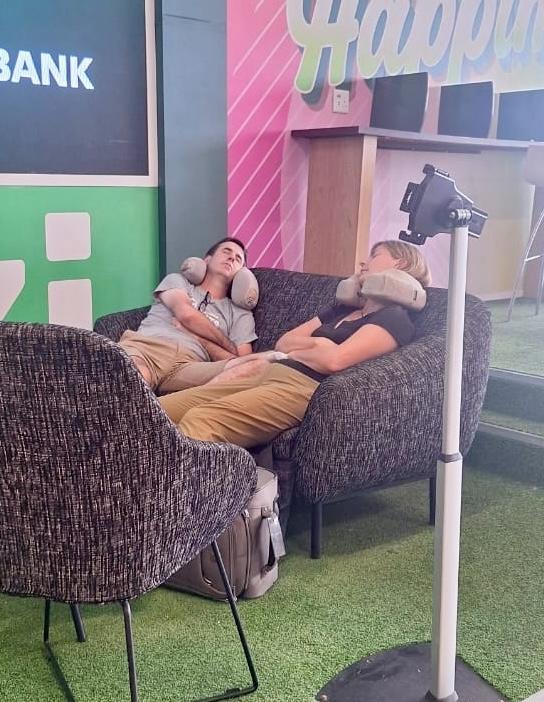
We were not brave enough to drive straight from Johannesburg airport, so instead flew from Joburg to a local airport just outside of Kruger. Our flight to Joburg was a night flight and the layover was quite long. This meant we were pretty tired after the night flight and a South African colleague of ours also travelling through Joburg snapped this photo of us – he didn’t even wake us up to say hi!
We flew into a tiny airport just outside Kruger National Park in a town called Hoedspruit. We never really mastered the pronunciation of this place but it was something like ‘hood spraight’ (apologies to Ghavin and Rentia – two Afrikaans speaking friends of ours and yes that is how he spells his name). We picked up our car from Bluu Car Rental who I would thoroughly recommend – very minimal fuss. The car was a Hyundai Tucson with only about 9,000 km on the odometer. It is a compact to mid-sized SUV which was perfect for our trip and definitely got us out of trouble a couple of times on some of the smaller roads.
We drove straight to the park gate (Orpen Gate) and showed our pre-purchased credentials. I should say that everything can be organized and purchased on one website run by the South African National Parks organization – Sanparks. This has a pretty good user experience and we even managed to get a refund for one mistake we made along the way. We had bought a Wild Card which allows entry to all the parks for a whole year. At the time of writing the ‘Couples’ Wild Card costs about $370 for non South African citizens (so for two people, not each). The entry fee without a wildcard is around $30 per person. So for two people it’s cheaper to buy a Wildcard if you plan on more than 6 visits. By some incredible stroke of fate, we were able to also use the card 3 months later in Eswatini (another country!) so we really got great use out of it.
In the high season, which we were in, you are still recommended to book your entry slot as there are only so many per hour or day. We had pre-booked those too on the same website but had to show all this information to the person at the gate. Here is where we made our first mistake which should easily have been avoided had the registration place been a little more geared to first timers. There was no map to purchase at the gate. From memory there was a little shop just after the gate and we should have stopped there to buy a map. We were going to a major camp which we assumed would be well sign posted and we knew there is a fairly good road system in Kruger. However, what we didn’t know is that there are basically two types of roads – normal paved roads and small dirt roads. After a while of driving we saw a sign to Olifants Rest Camp off the main road we were driving on. As it happened three cars were coming off that road onto our main road so it looked legitimate. We duly took this smaller road. We didn’t realize just how far it is to the Olifants camp if you are taking roads that sometimes won’t allow you to drive more than 10 miles an hour. The drive was actually really nice and we saw a ton of wildlife on the way mostly on our own. It was just frustrating never really being sure we were on the right track and it taking so long. What should have been maybe an hour and a half was more like 4 hours from memory.
If you are reading this because you are planning on self-driving in Kruger make sure you either have a map printed out from the internet first (or have it on your phone) which shows the big and small roads or buy one as you enter the park. The one we eventually bought was excellent as it also had the majority of birds and animals to see there.
Earlier in the year we met a couple who had regularly gone to Kruger. We remembered them saying that the shops in the camps were basically the same price as shops outside of the park so you didn’t need to necessarily load up on food etc before going in. This seemed singularly unlikely. Why wouldn’t you jack up the prices for a captive market. Well the only reason I can think of is that you are genuine about wanting to encourage a wide section of the population to actually visit the park and hats off to South Africa for committing to this. Each rest camp had a range of accommodation from small huts with AC right down to camping with your own tents. Each place had its own small barbecue or ‘braai’ as the locals called it and the shops had good quality meat and coals etc so you could cook your own food. Each rest camp also had a small restaurant so you had that option too. The service in the restaurants tended to be slow but the food and the prices were fine. I would say we typically had one meal in the restaurant and one meal that we cooked ourselves most days.
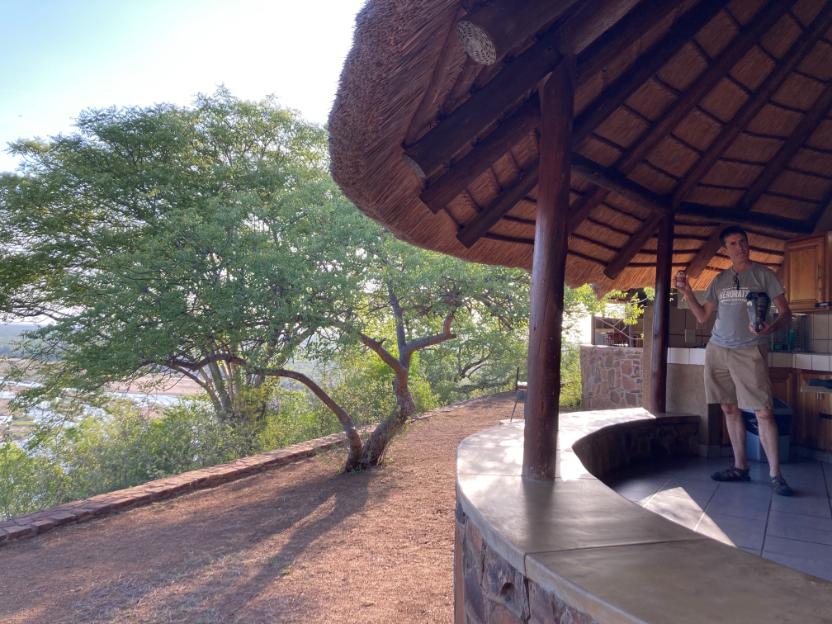
Olifants is a great camp as it overlooks a river system from quite high up affording a great view of all the wildlife there including, elephants, hippos, crocs and loads of birds. We had one of the more up-market options which was a hut complete with AC which was fortunate as this was the summer for South Africa and, especially for those first few days it was incredibly hot. Staying in the park is not only affordable but has the extra advantage of allowing you to get out and about in the park before people outside the park are allowed in. At that time of the year the camp gates opened at 4:30 am whereas the park gates opened at 5:30 am.
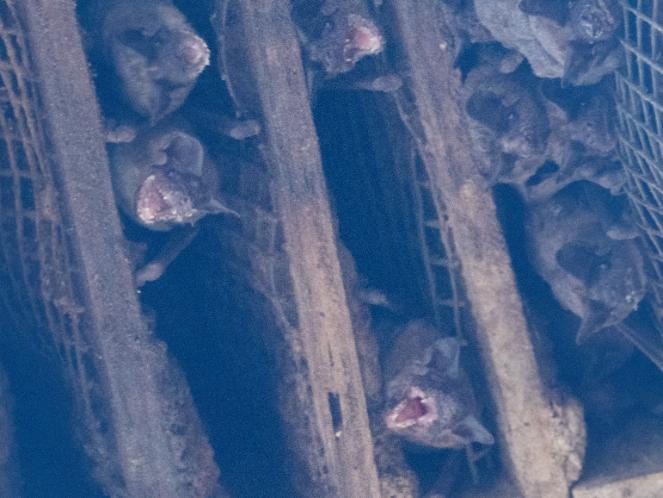
While we were at Olifants we did a walking safari for a morning. On the way to the start point, while in a vehicle, someone spotted some lions who then got pretty active right in front of us. We didn’t see too much on the walk but did get pretty close to some boisterous hippos in the water which was cool. One thing that we noticed is that a lot of the lodges had free standing bat boxes on stilts. This made for some pretty good shots as their waking up time approached!
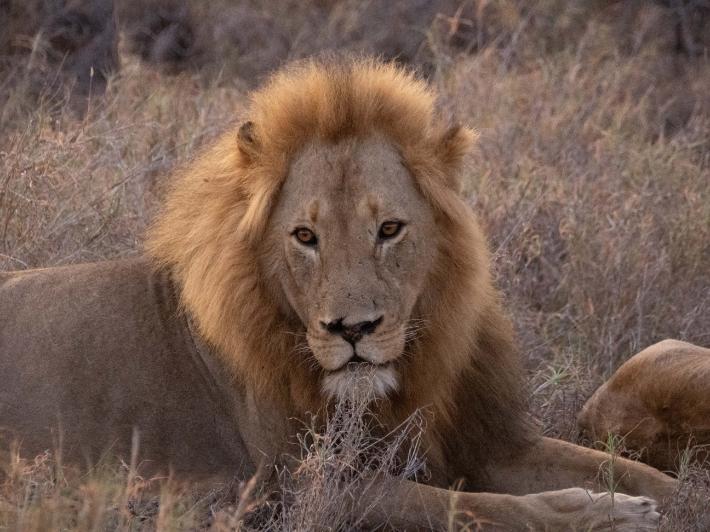
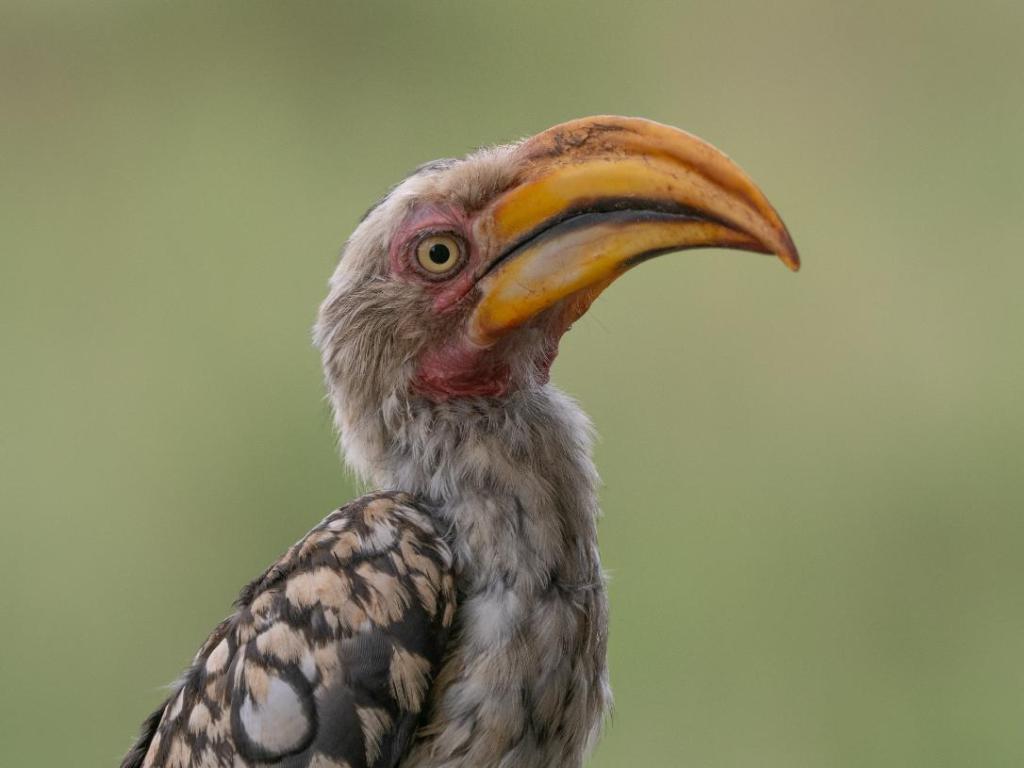
After a few days at Olifants we headed south to our next location in the park at Lower Sabie rest camp. This was a good distance from Olifants but it didn’t matter as we enjoyed the drive through the park seeing lots of wildlife as we went. Lower Sabie is a really nice camp with a good restaurant albeit with very slow service. Like all the places it has a good shop too for groceries. The restaurant looked over a river and we frequently saw elephants crossing the river at this point. There were also lots of birds coming to the lunch tables including hornbills.

We did another drive at Lower Sabie which was nice as we got a glimpse of a leopard but the best was yet to come. That evening we saw a lot of cars on the side of the road overlooking a drainage ditch. They said that there were supposed to be leopard cubs there. We didn’t see them that evening but marked the spot for the next day. That morning we left early to try to find the spot and sure enough we found it pretty quickly. I think there was one other car there. After a little while, two very young leopard cubs came out and I managed to get a few photos. I couldn’t believe how small and cute they were. Later that day we were driving along a road on our own and out of nowhere there was a leopard by the side of the road. I jammed on the brakes and hit reverse and we got a really good view of it before it disappeared into the forest. The amazing thing about Kruger is that sometimes you get to see something really amazing entirely on your own.

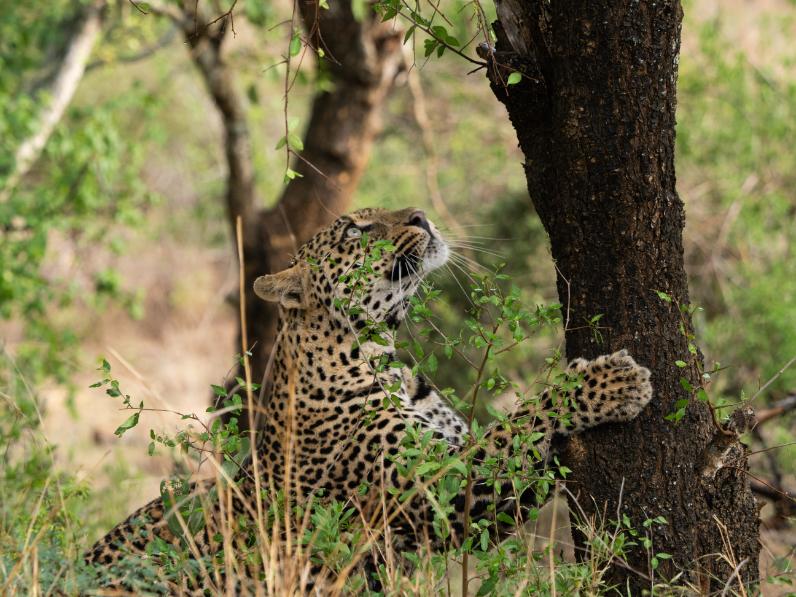
The next day we duly headed off to see if we could see the leopard cubs again and again we saw them albeit a very fleeting glimpse. We figured they had to come back to the drainage ditch so we waited…. and waited.. and waited. I think we were there for over 4 hours – and they never came back (and it was raining)! Oh well, you win some and you lose some.
On the 21st December we left the park at the southernmost gate, Crocodile Bridge Gate, and headed towards our next destination which was an Airbnb in a small community bordering Kruger called Marloth Park. Marloth Park is an area of approximately 30 square kilometers (11.5 square miles). It felt very much like a holiday home place and seemed almost entirely populated with South Africans. As well as a large number of holiday homes. There was also at least one rest camp style site but in addition to spots for tents, all the way up to small cabins it also had space for motor homes. The camp also had some restaurants, bars and shops and there was another small supermarket in the town as well as a small number of restaurants.
Our Airbnb was an absolute delight for many reasons. Firstly, it was a whole 3 bedroom house and had just had the kitchen refurbished. We were literally the first people to use it. It also had a little plunge pool and a great built in barbecue area which we used every night we were there. When we booked it there was an option to buy wild animal feed and we naturally went for as much as you could pre-order. While the lady was showing us around, a mother warthog appeared with some baby warthogs. The second she left we threw out some food which they eagerly gobbled up. I can’t exactly remember the order of who showed up next but it was probably impalas, followed by Kudu. Kudu are one of the largest antelopes and can have huge curly horns. Almost immediately I tested the possibility of feeding them by hand and they went straight for it without hesitation. I then tried the same trick on the warthogs which also worked. In fact the only animals that showed up that we weren’t able to feed by hand were the impala, which are naturally shy, and the monkeys.
A bit later I went upstairs to do something and I got a shout from Lindsey telling me to come down. To my amazement there were two actual Wildebeests in the backyard. I figured I’d give the old handfeeding a try and was amazed when they went for it. Wildebeests are also known as Gnus so we called them Gav and Garry. You can think what you like about the morality of taming a population of wild animals but I have to say that we loved it the whole time we were there. Here’s a couple of videos I made while we were there:
As if that wasn’t enough there was another treat to be had. This took the form of two bush baby houses built into the ceiling of the upstairs veranda. Apparently these were for two different species, one larger than the other. Judging by the resounding thump we could hear from downstairs we think we heard the larger of the two coming out most evenings. We heard that one but never really saw it. The small ones however, we could see jumping from the upstairs balcony onto the nearby trees and then down to a bird feeder where we were advised to put some banana slices.
After a couple of days we decided to go upstairs at the time they normally come down to see if we could see them come out of their houses. We never saw the big one come out but the little ones did appear from the eves of the roof (and not the house) and then began jumping around the area to get the banana that we put out for them. Their jumping ability was astonishing considering the distance and accuracy that they could reach comparatively to their size.


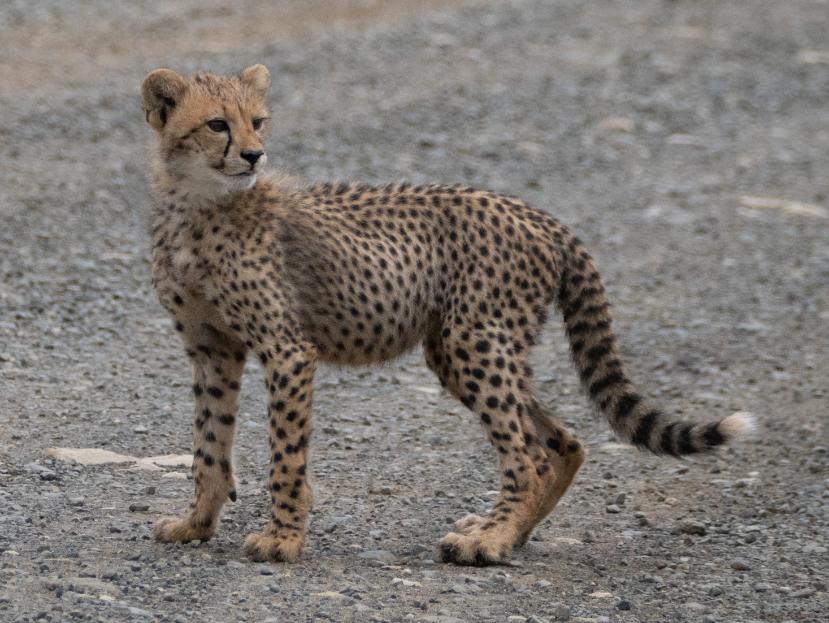
From our Airbnb to the Crocodile Bridge Gate was only about a 20 minute drive. At that time of year you have to queue up to get in but that wasn’t usually a problem. Most days we went into the park and had some rest days too. One day we hired a guide (Irving Knight) with a vehicle to take us into the park . He was great and really knew his birds but the most surprising thing was an experience with lions. At one point he stopped and showed us very fresh tracks saying that lions had been chasing some wild dogs. We drove around for a bit but didn’t see anything at first. Then the guide heard some lions I think and started talking to us about the ‘contact’ calls that they make. He then impersonated the contact call himself which was very quiet. Then, he said that they would respond to the call he was making and we should just sit tight and wait. I totally didn’t believe anything would happen but to our astonishment two lions appeared from the bush and came right up to the car – we couldn’t believe it! As if that wasn’t enough we also saw a cheetah with two cubs. Lindsey (yes, Lindsey – not me) asked the driver to stop because she saw A BIRD. That was when she spotted the cheetahs!

Ever wondered what the expression ‘locked horns’ refers to. It kinds of get crazy towards the end of the video.
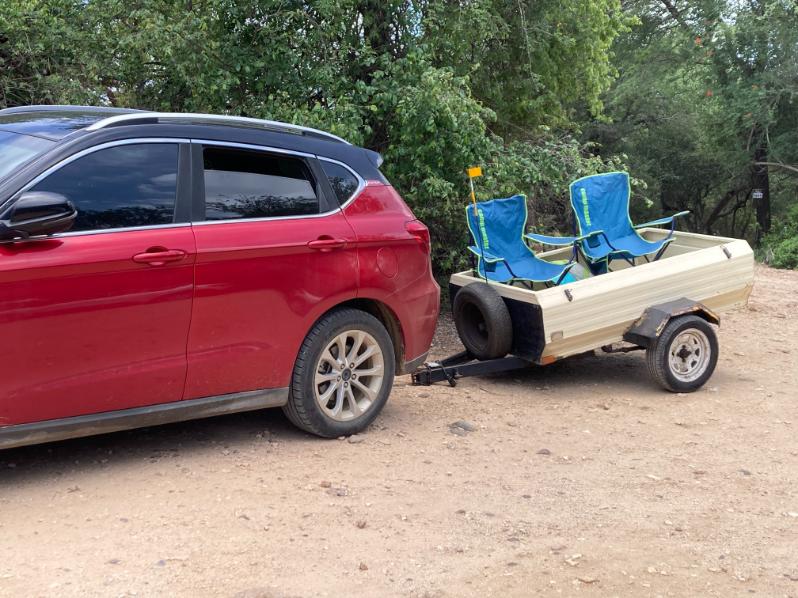
While staying in Marloth Park we learned a little bit about South African habits. For instance, a lot of South Africans are not massively into wearing shoes or even flipflops. It was commonplace to see whole families get out of their car in the dirt parking lot and then walk barefoot into the supermarket. Another favourite is standing up in the back of your pick up while the vehicle is going along. We saw quite a few young children doing this and even once saw some deck chairs conveniently placed in a trailer. Having lived in Myanmar, we are used to different places having different levels of risk as part of their daily lives but it was still surprising. When you enter Kruger you get a leaflet with handy safety rules mainly about not getting out of your car. However, there was one that caught our eye as odd as it asked people not to let their children drive the vehicles in the park. It turns out that South Africans often have their kids sit on their laps and steer the car I suppose. We saw that happen a number of times both in and out of the park.
Our next stop for this trip was another airbnb this time in the town we landed in – Hoedspruit. Our Airbnb was in another fenced community albeit a lot smaller called Hoedspruit Wildlife Estate. It is about 650 hectares of which less than half is for residential property – the remainder being reserved for the wildlife. Unlike Marloth Park, you were not allowed to feed the animals. This meant they weren’t quite as tame but we still managed to get pretty close. Although you weren’t allowed to feed them, we did have a small manmade water hole for them to drink from and we had many visitors.
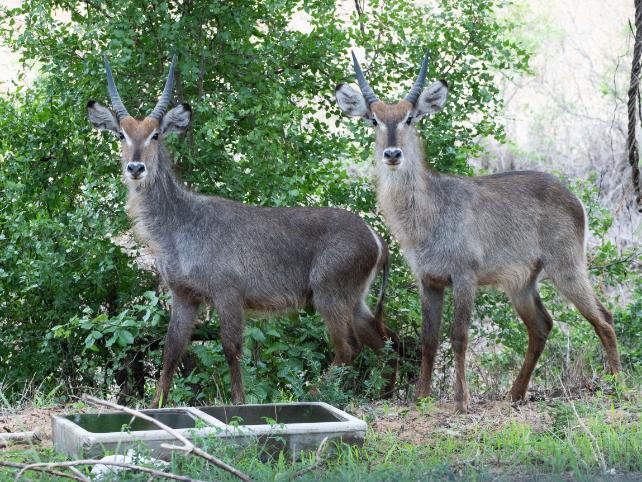
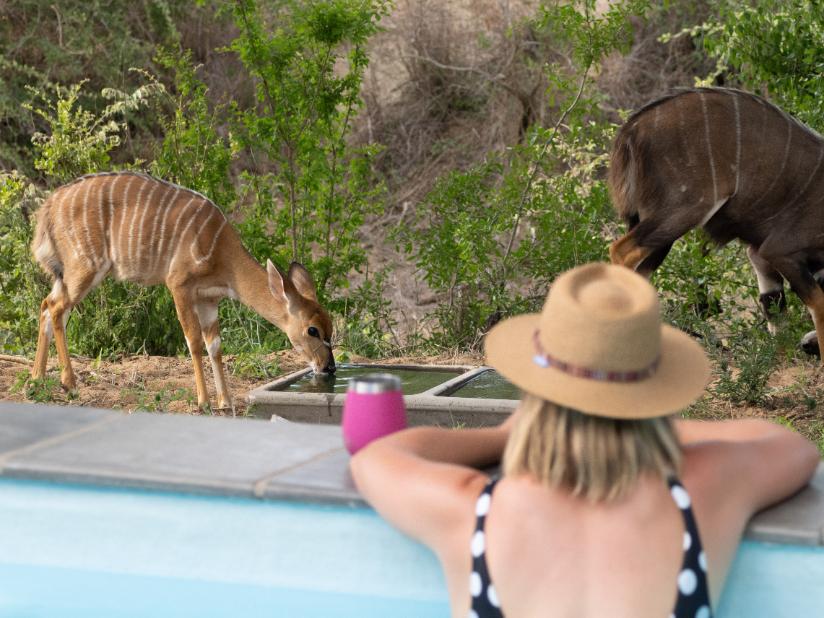
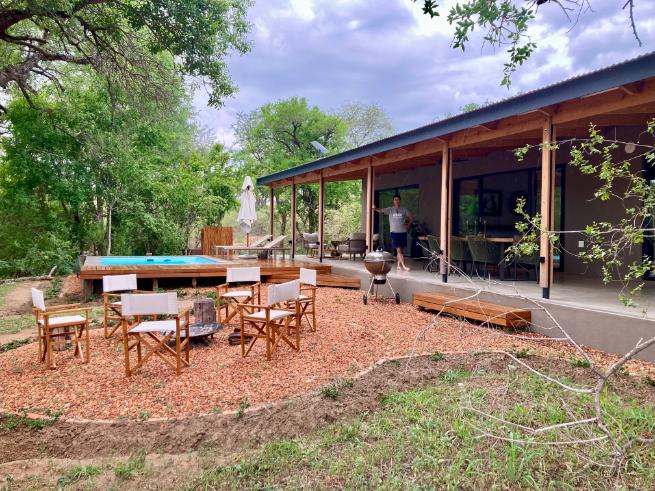
Unlike Marloth Park, this estate seemed to have many more people who lived there permanently. Our place was more upscale than the last place, if a little less practical. While there we hired a guide with a vehicle to take us into one of the private reserves next to Kruger. These used to be all fenced in but in the mid-90’s they took all the internal fences down to allow the animals to roam freely. This led to funny situations where the guide rushed around trying to get a good view of a rhino before it crossed into another reserve. He knew the boundary but the rhino wasn’t bothered! They were the first rhinos we saw on that trip so we were pretty happy with that sighting.
Hoedspruit Wildlife Estate was nice and the accommodation itself excellent but you can’t easily access Kruger from there yourself. It had the advantage of more nearby restaurants which was also good. In general that part of the trip was mostly about relaxing in the high quality accommodation. That being said, we did visit Blyde River Canyon a couple of times. You can do a boat ride in the canyon itself which was nice and there is a waterfall walk just before you get to the canyon which was also lovely, affording great opportunities for birds including the only sightings I had of the Narina Trogon and Half-collared Kingfisher.

The final part of our trip was staying in a private reserve called Sabi Sands in a lodge called Umkumbe Safari Lodge. This was the only traditional style safari part of our trip where you are staying in a lodge and have guided drives twice a day. It was not particularly high end, described as ‘affordable’, but had all the usual advantages of staying in a lodge with the animals up close and we were lucky to have a good guide. Unlike in Kenya we shared a pretty full vehicle every drive but all the people were nice so that was not a problem.
To get there we had a driver pick us up from the airport car rental place as that was where we gave back the hire car. I had it thoroughly washed and polished before giving it back so there were no questions from the car rental company. The driver took us to the camp and on the way amusingly kept warning us where the road was going to be bad. In comparison with the average Ghanaian road, however, these roads were pretty good so we just laughed.
One of the highlights of the trip was the main observation area/bar overlooking a seasonal river. Many times we saw a large herd of elephants come down to the river which was always a wonderful site to see. They had our favorite system of managing the bar where you simply write down what you had against your room and help yourself. There was a large group of Swedish people on a big family holiday. This included the grandpa who would often toddle up to the bar for wine but wasn’t very good at serving himself. I ended up helping him with a glass of Syrah one time and then the next time that happened he said that I should give him a bigger glass ‘unlike the last time’! I’m not sure whether he thought that I worked there but I expect not.
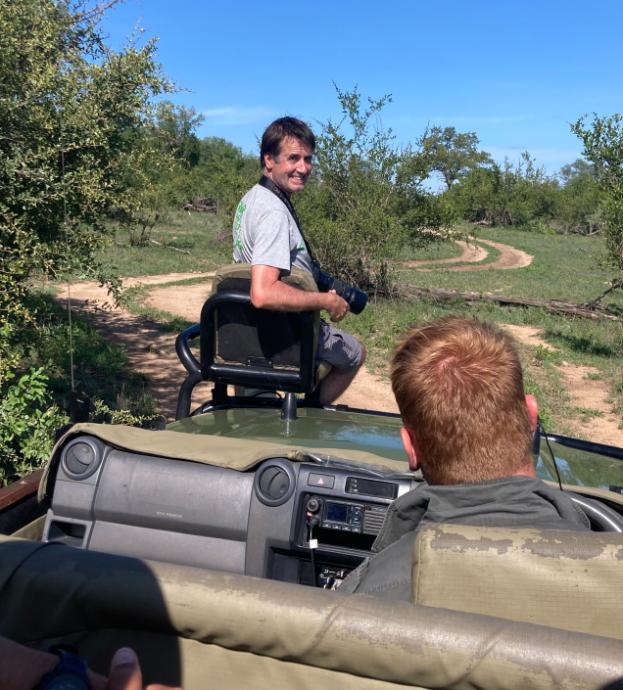
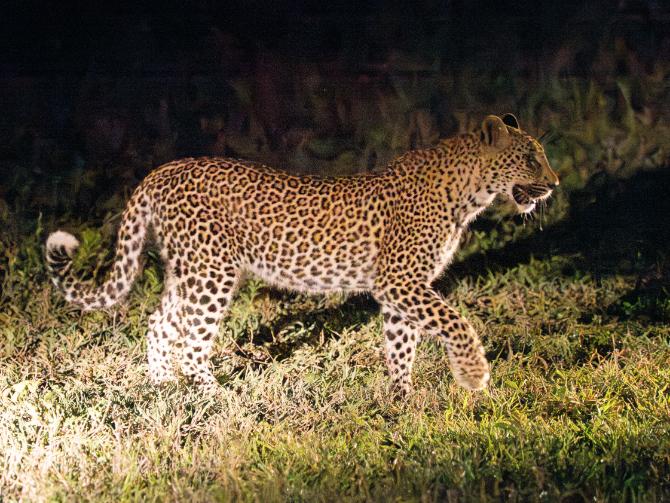
The animal highlights on this part were seeing leopards quite a few times including one at night which was cool as it was lit by the car lights allowing some good photos. It was very unconcerned with the cars I have to say. It was also our best place for rhinos and we managed to get super close to them including young ones which was amazing. Finally, on our last day I even got to sit on the tracker’s seat of our vehicle and pretend to be a tracker – mostly I was holding on for dear life!

This was a great trip. If (and I mean when) we do it again, we would probably spend more time in the park itself. We’d probably spend at least a week in Kruger, maybe staying at a couple of different rest camps before having a break in an Airbnb outside the park. Marloth Park isn’t for everyone but we’d go back there in a heartbeat. The thing is to find the option right for you. Then, we’d go back into the park I think for another stint before heading home. I would say that for anyone with kids or simply wanting to go on an African safari without spending the earth, then Kruger is a great option.
 Gav and Schubie's Adventure Blog
So happy to read of your adventures! Thank you for writing. Until next time, stay well! Love from Cleveland, Mike and Marilyn Frazier
LikeLike
Great post! Thanks for sharing:) Sao Paulo is high on my list. The photos of the animals are fantastic
LikeLike